When students build a robot

Four high-school students. One humanoid. Eight weeks from a box of parts to its first step.

Math, physics, and coding usually arrive as separate classes. Each makes sense on its own, but they rarely add up to something a student cares about.

So we build a robot instead, and let each subject show up when the robot needs it. Geometry is how a knee bends. Circuits are why a joint won’t move. Code is how it stands up.

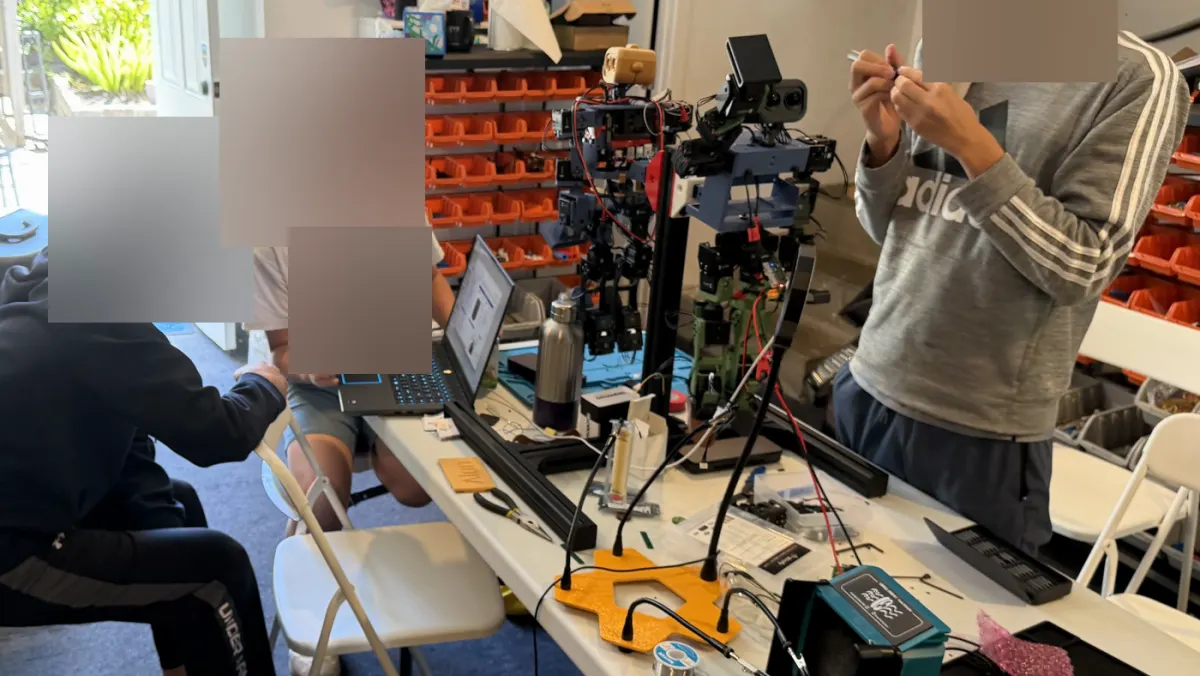
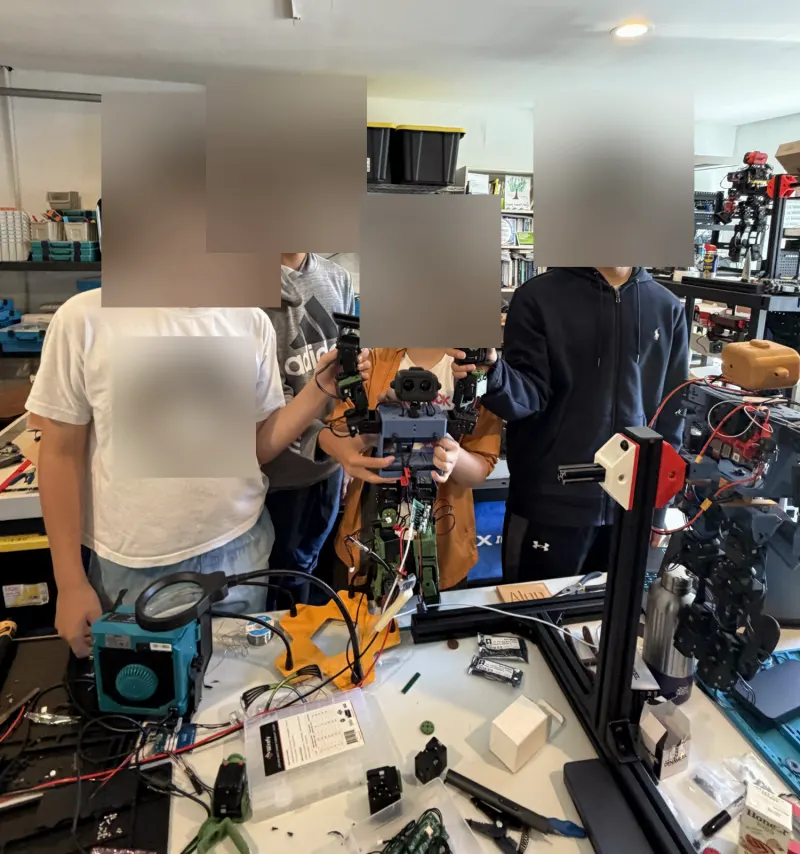
Four students holding up the partly assembled upper body of their robot
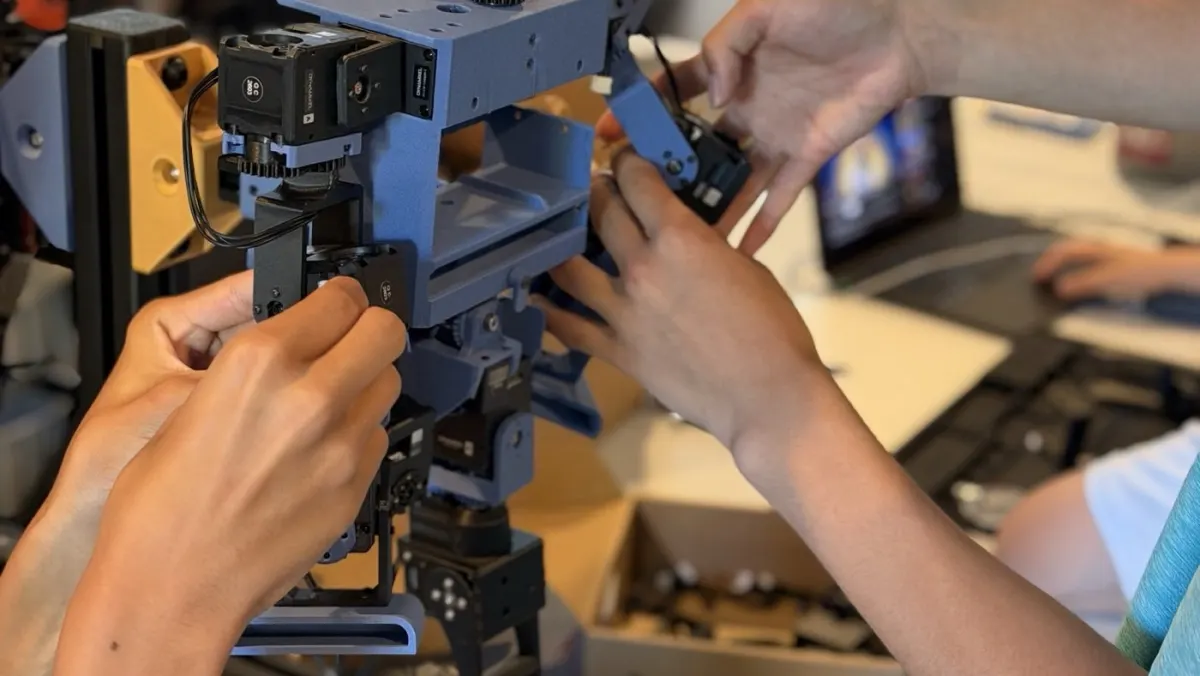
Hands assembling the torso and arm actuators of a humanoid robot
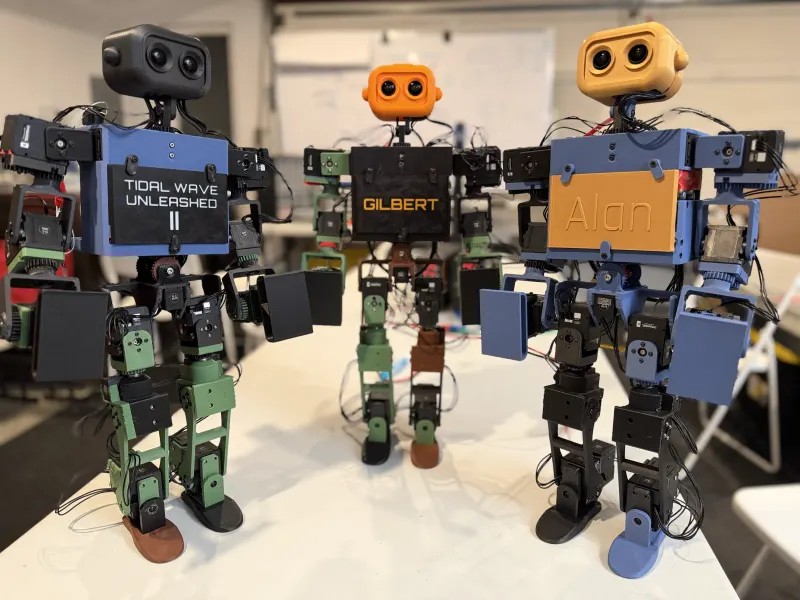
Three finished student robots with team nameplates
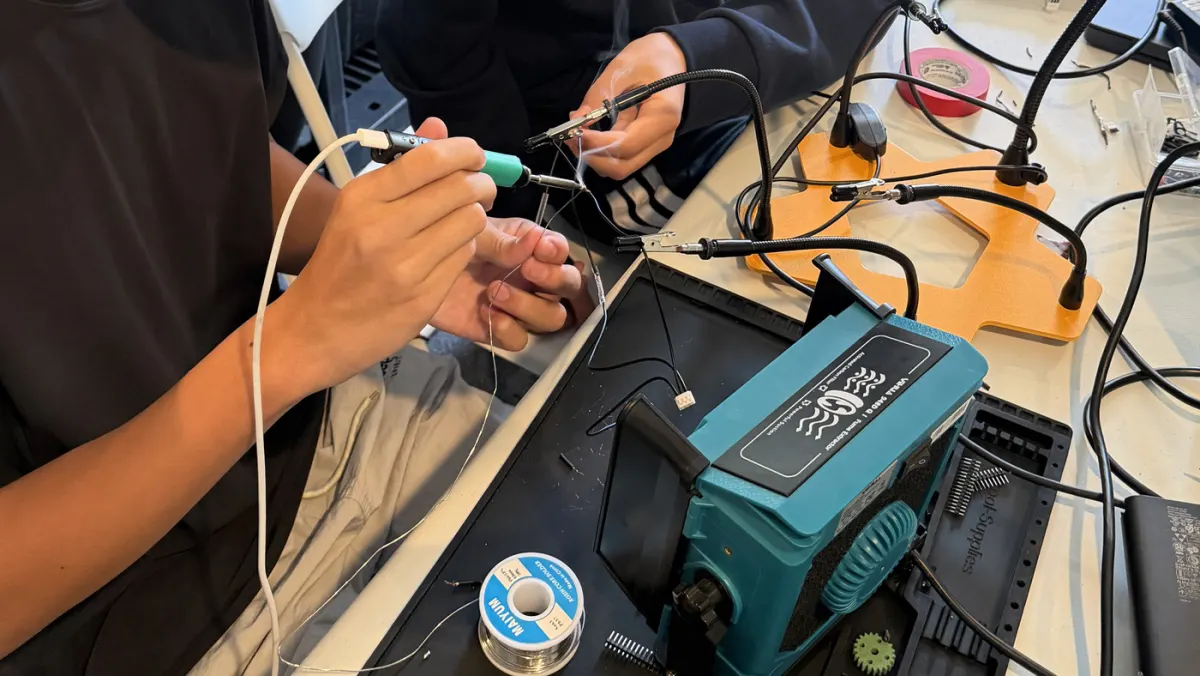
A student soldering wires at an electronics bench
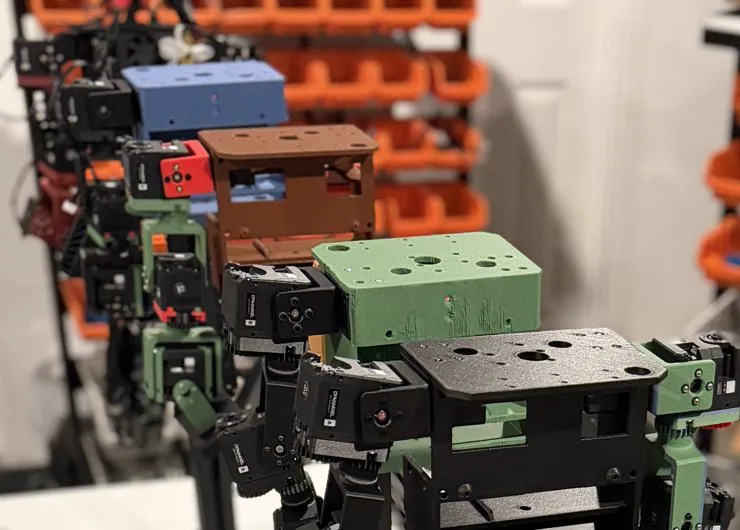
Several student robots in progress on the lab bench
Students running code on a laptop next to two robots
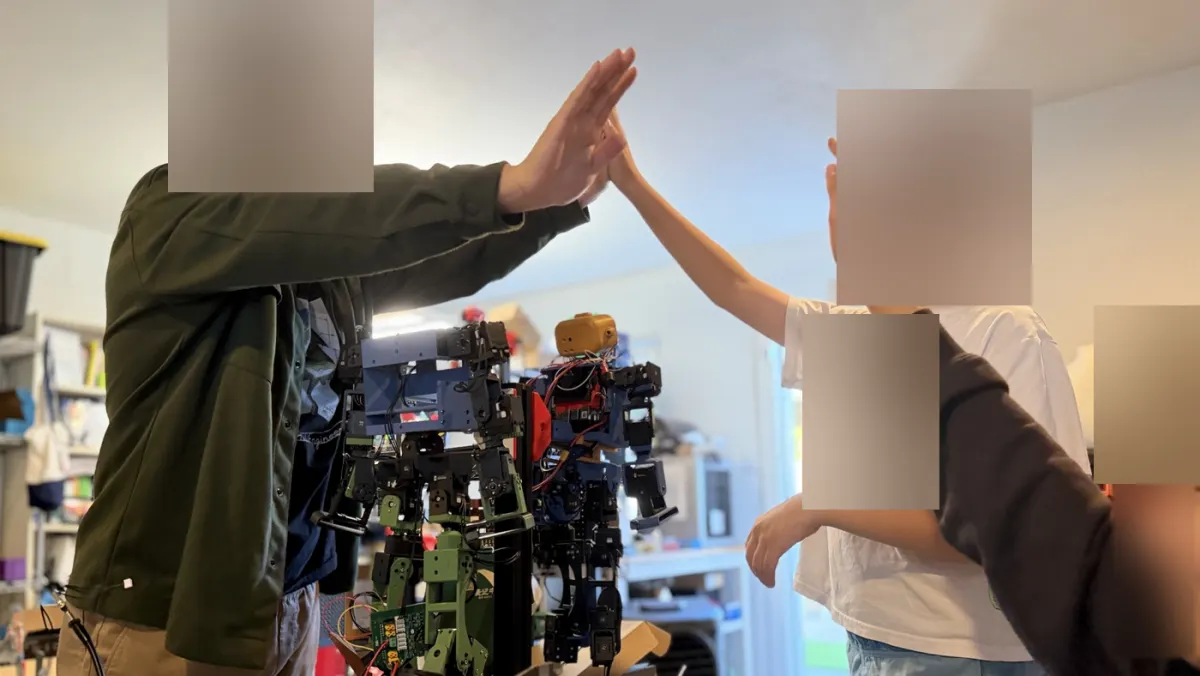
Students and their mentor celebrating a successful test

Cohort students in the Menlo Park lab. Faces blurred for privacy.

Eight weeks, one robot

What it takes to make a robot stand up

Each layer is a different field of engineering. Scroll to watch them stack up.

SIM TWIN COMPUTER BATTERY > move(j3, 10°) cmd 10.0° act 9.4° Δ 0.6° … why? REWARD
Weeks 1–3

A body

Assemble a humanoid from 3D-printed parts and servo motors, one limb at a time.

LearnsMechanical engineering, reading assembly drawings, degrees of freedom.

Week 4

Nerves

Wire the power, onboard computer, and sensors, and check every connection before the first power-on.

LearnsCircuits, power, sensors, electrical safety.

Weeks 5–6

Reflexes

Calibrate every joint, then write the first program, and explain why the joint doesn’t land exactly where it was told.

LearnsLinux, Python, logging, the gap between a command and reality.

Week 7

A twin

Rebuild the robot in the MuJoCo physics simulator and compare the same motion in both worlds.

LearnsPhysics simulation, open- vs. closed-loop control, keyframe motion.

Week 8

Learning

Watch a policy train in simulation, change one reward, and see how the robot behaves differently.

LearnsReinforcement learning: policies, rewards, observations, actions.

All eight weeks

Four people

Four students share one robot, rotate roles, and present it together at the final showcase.

LearnsCollaboration, engineering notebooks, presenting to an audience.
Cohort 03 · Rolling review

Give them a project of their own.

Open to students in grades 9–12. No robotics experience needed, and parents can apply on a student’s behalf.